
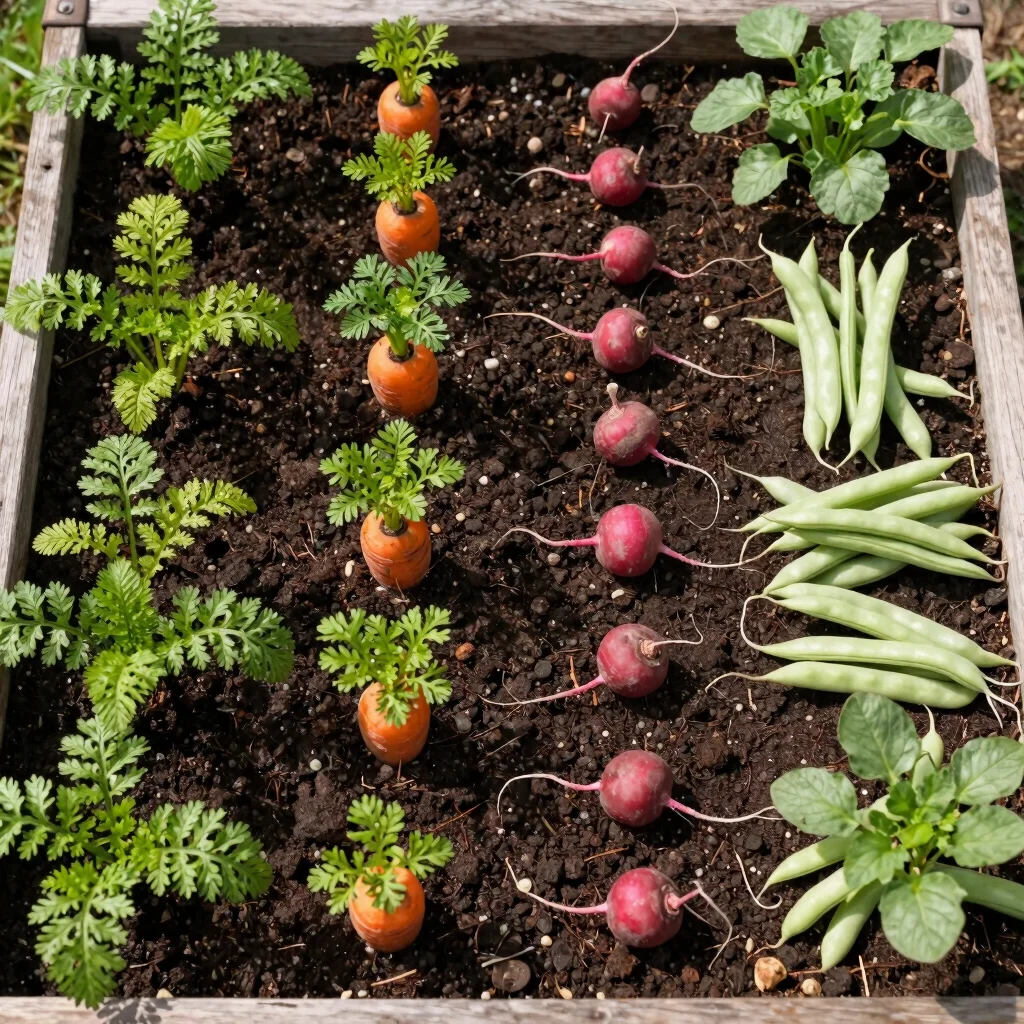
Planting complementary vegetable pairs creates a symbiotic ecosystem where root architectures support one another beneath the surface. Soil quality directly determines kitchen flavor, and thoughtful crop arrangements enrich the bed without relying on synthetic inputs. Integrating strategic companion planting ensures robust soil aeration and pest defense throughout the growing season.
Breaking Heavy Clay with Root Crops
Plant radishes alongside your carrots to naturally thin the soil and break up heavy clay deposits. Fast-germinating radishes carve open root channels early, allowing slower carrot taproots to plunge deep into cool, friable earth without resistance.
As radishes are pulled for early harvest, they leave subterranean aeration pathways that improve drainage for neighboring plants. This seasonal rotation trick optimizes space in compact raised beds without extra tilling.
Nitrogen Fixation for Heavy Feeders
Intercropping bush beans with heavy feeders like kale and zucchini provides an continuous biological nitrogen boost. Rhizobia bacteria hosted on legume roots convert atmospheric nitrogen into plant-accessible nourishment directly in the root zone. This natural fertilization leads to higher nutrient density in leafy greens.
Aromatic Pest Barriers for Summer Beds
Positioning strong aromatic herbs like basil and chives near sweet crops confuses damaging insects while attracting pollinators. Essential oil vapors emitted by flowering herbs shield developing produce, allowing crops to mature undisturbed until final kitchen prep.